Physics is a subject where students can always improve if they practice routinely. In this post I give some tips on how to revise Physics effectively.
5. Condense notes onto a single page
This is a good starting point for revision. Pick a topic, such as waves (always start with your weakest topics). Take a blank piece of A4 paper. Try to record everything you can remember about waves on the paper, linking ideas together spatially. Then use the textbook to add detail you missed in the gaps. This strategy develops and practices the skill of retrieval from long term memory, which strengthens those memories.
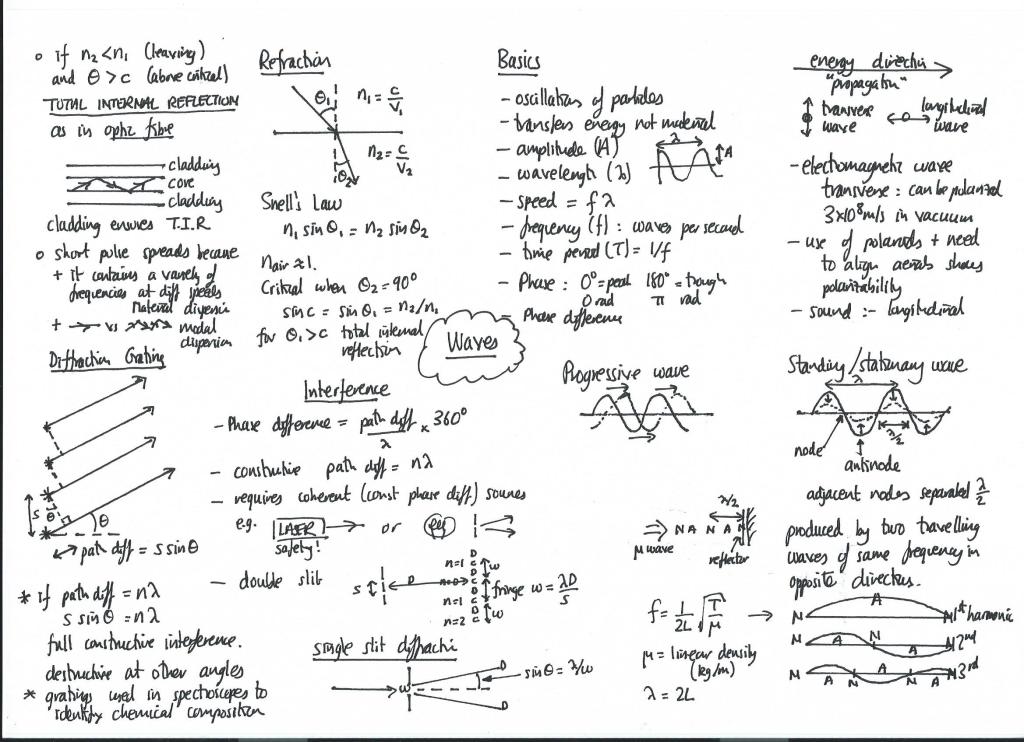
Be cautious though, just making notes from the textbook is not effective revision, and you won’t be examined on your ability to make a pretty spider diagram, so leave plenty of time in your revision schedule for other strategies.
4. Use Isaac Physics to check knowledge
Systematically work through Isaac Physics’s consolidation pages. They can be found here. Work through the questions and use them to identify gaps in your knowledge you didn’t know you had, then work through more questions to fill those gaps.
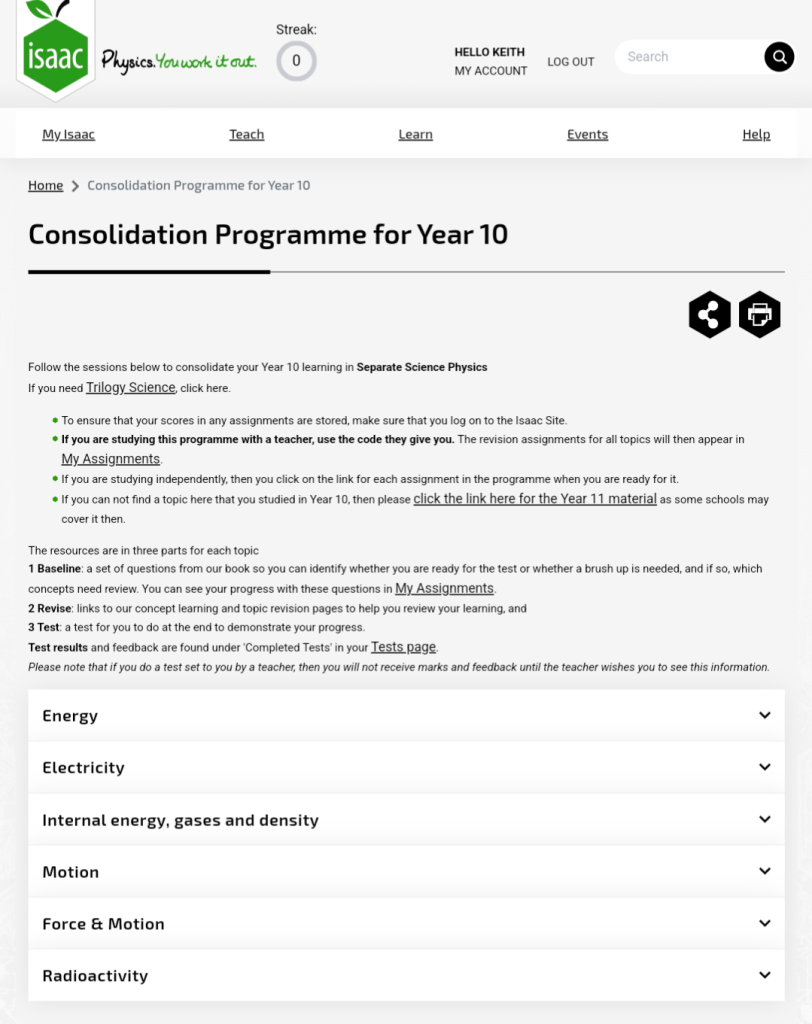
You can log off Isaac Physics if you want to retry questions, or go to My Isaac > My Account > Other and select ‘hide precious question attempts’.
3. Practice past paper questions
This is a big one, and it is absolutely essential. Go directly to the exam board’s website and use their papers, don’t download chopped up papers from third party websites (firstly, they don’t give you the proper experience. Secondly, they break copyright law and should not be supported. Thirdly, it’s just not necessarily because by the time you’re ready to look at past paper questions in your revision, you won’t need to focus on particular topics).
This should be the last stage in revision. Here you will practice stamina, exam technique, and exam board idiosyncrasies. Print the papers if you can, and sit them under timed conditions as close to real exam conditions as possible. Use the mark schemes and examiner reports from your exam board to identify those odd little ways you could lose marks.
2. Learn the equations, learn the definitions
This is more important than practicing last papers. Commit the equations and definitions to memory. The equations are given to A Level students and, in 2024, will also be given to GCSE students. That doesn’t matter. Learn them anyway. Equations are the physicist’s language, and you cannot speak the language fluently if you have to look up every word. In order to solve problems, you simply must have the equations in your head so that you can assimilate the problems in the exam.
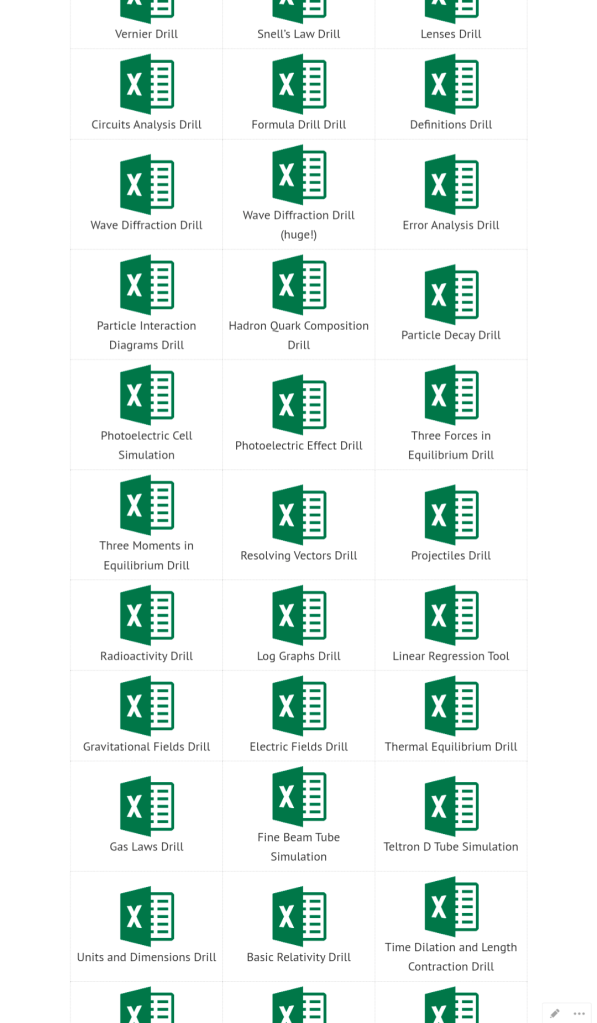
No less important are the definitions of key words and phrases. Questions that demand a written response often (very often, most often) award marks for the use of technical language, or for defining technical words that are used in the question. It’s an easy win. There are equation and definition drills (question generators) on the enrolled GCSE and A Level tutee pages of my website, which can be downloaded and used daily to master these knowledges.
1. Do the work
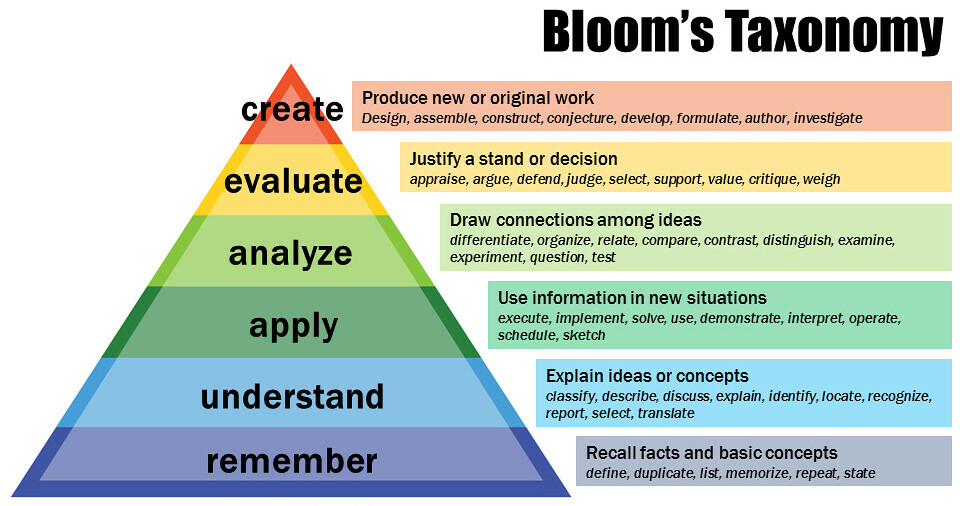
Blooms taxonomy places memorisation on the bottom. That means memorising stuff is the easiest learning task, but it also means the other more advanced tasks cannot be achieved until the bare content is memorised. It takes effort to memorise stuff.
Set time aside and put in the graft. Do ‘look, cover, write, check’ on the equations and definitions. It’s not fun, but just get it done routinely. Do the past exam papers, I know they take hours, but carve that time out of your schedule and do them. Use Isaac Physics to identify knowledge gaps, it’s all there to use, but if you don’t systematically and routinely use them, you will not improve.
It takes discipline, and intrinsic motivation, but everyone can learn to be successful in Physics exams if they get into good habits and just get the revision done. Be active in your revision!
 Physics with Keith
