Physics has a problem with representation, or rather the under-representation of most groups of people. The majority of physicists you see pictures of in textbooks are white cis men. The majority of physics discoveries that you learn about in school were credited to white cis men, so it’s not a surprise that those are the people whose photographs make it into the textbooks. Why is that?
Elena Long, a transgender physicist in the USA, surveyed physicists and found that 50% of transgender physicists had experienced some form of discrimination. That is an abominable statistic! Physicists are supposed to be the more enlightened amongst humans – we have glimpsed the nature of physical reality more closely and more deeply than anyone else – and yet here we have physicists being unkind to each other! Alas, even amongst physicists, it seems prejudices exist and kindness is forgotten.

We are privileged to live in a time when discrimination against individuals on the basis of sex, gender (including gender reassignment), race, religion, ethnicity, sexuality, looks and beliefs is illegal, but the Equality Act outlawing discriminate in the UK only came into force in October 2010. Galileo (1564-1642 CE) is often credited as being the father of physics, although this is just another Euro-centric distortion of history. Ibn Al-Haytham is described as the father of modern optics and he lived in 965-1050 CE), hundreds of years earlier, but he was from Iraq, so European history books didn’t do a splendid job of recording his contribution. How many other contributions by non-white non-cis male physicists have gone under-reported due to prejudice and discrimination?
It is a fact that, in Europe, there were more white cis male physicists than non-white non-cis male physicists, but if we still have 50% of transgender physicists being discriminated against even now then it’s no surprise so few non-white non-cis male people wanted to become physicists.
In the early days of physics, there was much to discover and it was relatively easy to discover it. Almost all of our secondary school (high school) physics curriculum is based on physics that is over 120 years old! This is because it is felt by some that modern physics is inaccessible to young people. Admittedly, the mathematics of the Schrödinger equation and Minkowski spacetime is a bit beyond the average 16 year old, and that’s all 100+ years old. (Would it not be possible to teach niche cases of quantum physics with mathematics that is accessible to young people?)
So, the physics that is deemed to be simple enough for high school students to understand was discovered at a time when discrimination was legal and minority groups were actively discriminated against. There’s often a nod to physics discovered outside Europe, but LGBTQ+ individuals are still severely underrepresented in physics textbooks. Isaac Newton never married and some claim he died a virgin. Maybe Isaac Newton was gay, bisexual or asexual, but we will never know, because of the views and attitudes of the time he lived. He professed to being a Christian, but it is known he had heretical views he kept private. He rejected the doctrine of the holy trinity, for example.
“Maybe Isaac Newton was gay, bisexual or asexual”
Fast forward to the modern era of physics. Physicists are still making discoveries, but understanding them requires a much higher level of mathematical competency than students attain during high school. Murray Gell-Mann, who died in 2019 aged 89, is possibly the most recent physicist to appear on high school curricula, albeit for A-Level physicists only. There might be mention of Stephen Hawking and Neil deGrasse Tyson and Brian Cox and Jim Al-Khalili, but mainly in reference to their teaching of popular science and not in reference to their contributions to furthering humanities understanding of the universe. So we start to see some diversity, but it’s linked to personalities who teach non-physicists via TV and books, rather than actual contributing physicists. To be fair, those listed above are (or were) contributing physicists, but if you ask the average person on the street what their contribution was, they probably wouldn’t be able to answer.
And they’re all cis men. To be fair, broadcasters are getting better at addressing the diversity issue, but the school physics curriculum lags woefully behind because most of the physics on the curriculum was discovered during a time of discrimination.
As an Isaac Physics ambassador, I have the privilege of being in touch with hundreds of physics teachers from diverse backgrounds across the country. I was recently discussing with a physics teacher (who I will not name, nor say which school they teach in) an issue they had with a policy their school had introduced. According to this teacher, their school was now insisting that they make inclusive references to LGBTQ+ individuals in lessons. A few LGBTQ+ scientists had been identified for them to include in lessons, but the teacher considered the contribution of the scientists to be less significant than people like Isaac Newton, Niels Bohr, Max Planck and other notable physicists. The teacher’s objection to their school’s new policy was that LGBTQ+ scientists did not feature in the history of physics, so it should not be included in lessons. I disagreed with this teacher, and explained that there were many LGBTQ+ scientists who have made – and who continue to make – very significant contributions to physics, but we just don’t know about them. We don’t know about them because they do not appear in our textbooks. I also said to this teacher that I felt it was important to highlight the diversity within physics today, because there are LGBTQ+ students who have the potential to go on and make valuable contributions in physics if they are encouraged to continue studying it, but if they do not see relatable role models in physics, they are less likely to feel drawn to study it further. This teacher’s personal views about LGBTQ+ issues are far less liberal (or even libertarian) than my own, but I rejoiced in their willingness to engage in real meaningful discussion.
There are LGBTQ+ students who have the potential to go on and make valuable contributions in physics if they are encouraged to continue studying it, but if they do not see relatable role models in physics, they are less likely to feel drawn to study it further
One of the most divisive topics in education at the moment is about how to support transgender students. The Cass Report was critical of how young people questioning their gender are quickly referred to the Gender Identity and Development Service due to the strong feelings different people have on the issue, and how discussions about transgender students can be stymied by an unwillingness of people to engage in open discussion. The BBC article (10 April 2024) states:
“What’s unfortunately happened for these young people is that because of the toxicity of the debate, they’ve often been bypassed by local services who’ve been really nervous about seeing them,” Dr Cass said.
“So rather than doing the things that they would do for other young people with depression, or anxiety, or perhaps undiagnosed autistic spectrum disorder, they’ve tended to pass them straight on to the [Gender Identity and Development] service.”
“There are few other areas of healthcare where professionals are so afraid to openly discuss their views, where people are vilified on social media, and where name-calling echoes the worst bullying behaviour,” she said.
Her report added that the “exceptional” toxicity has had a negative impact on the quality and availability of evidence.
I agree that it is important to be able to hold authentic, honest discussions about transgender students in the spirit of kindness and with the intention of caring for the students’ welfare.
The report suggested that there were individuals who were incorrectly entered into the gender reassignment process, when a diagnosis of autism spectrum disorder, depression or anxiety may have been more appropriate. I am not a medical professional, so I am not qualified to wade in on what proportion of students questioning their gender are depressed, anxious, autistic, or genuinely transgender. In the classroom, I have students who are at various stages of gender reassignment.

On my desk at work I display the trans rights flag. I wear a trans rights flag pin badge on my lanyard. I support trans rights. Please do not misunderstand me, I am not promoting gender reassignment to students; transgender people are still a small proportion of the population, so I am not telling cis male students they should consider changing gender. I do not think being transgender is a choice. The government equalities office estimates 200,000 to 500,000 transgender people in the UK, out of a population of 68.35 million. Even at the low estimate of 200,000 transgender people, it is nearly 3 people in every 1000 who is transgender. My school has approximately 1300 young people, so one might expect four transgender students. The government equalities office also state that 41% of transgender people had experienced a hate crime or incident due to their gender identity in the last year (the article was posted 2018). So one can estimate that two of the young people in my school will be a victim of a gender-related hate crime or incident each year.
When a gender dysphoric student enters my classroom, they know they are in a safe space to be themself. If they are actually autistic or suffering from depression or anxiety, as is stated in the Cass report, then they still find themselves in a safe and caring space. I will call a young person by their preferred pronouns and name, that’s just a matter of basic respect, and if it turns out they are transgender, they will have suffered less through the process by having a supportive environment. Physics should transcend all divisions. Let’s promote kindness!
To any transgender young people who are looking for transgender physicist role models, here are a few:
1. Angela Helen Clayton MBE
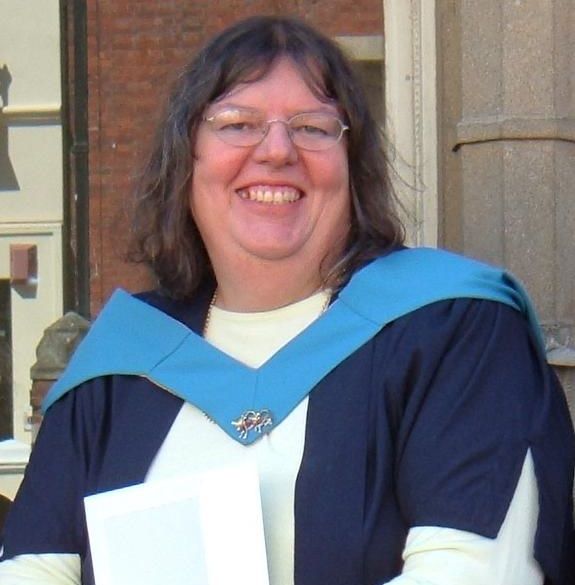
In her career she contributed to our understanding of nuclear criticality safety, becoming the head of criticality safety at the Atomic Weapons Establishment. For her services to gender issues she was awarded the MBE.
2. Elena Long

She contributed to our understanding of the internal structure of nucleons and is currently an associate professor of physics and astronomy at the University of New Hampshire.
She was awarded many awards, including the Jefferson Science Associates Promising Young Scientist award in 2014.
3. Lynn Conway
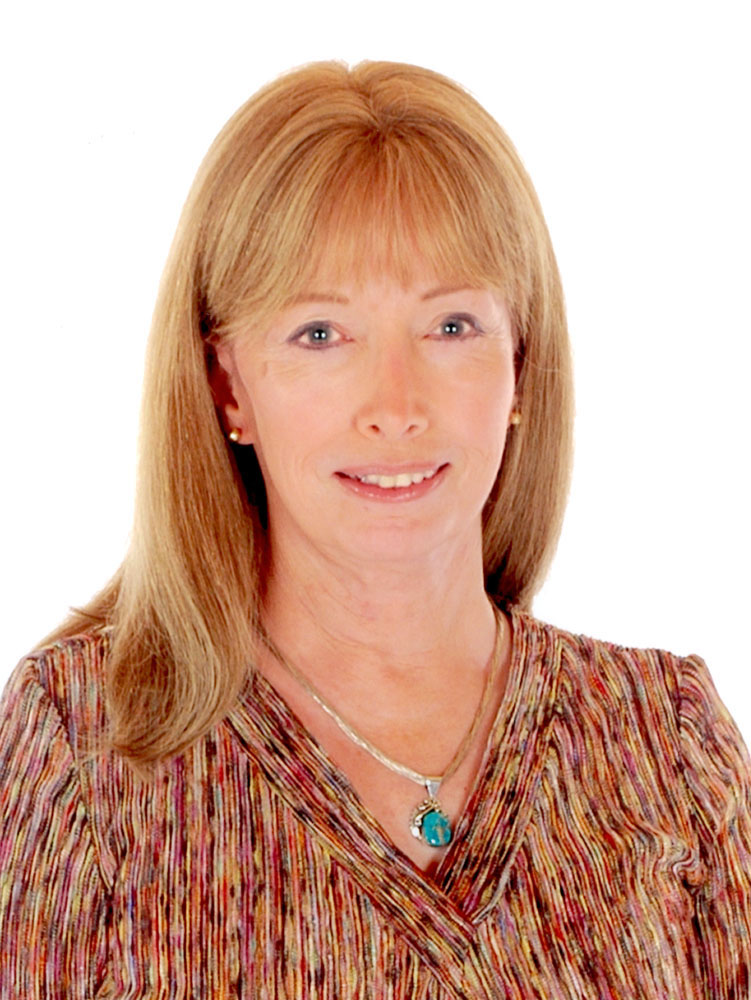
She was a computer scientist at IBM and invented ‘generalized dynamic instruction handling’, used in out-of-order execution to improve the performance of modern computer processors. She is famous for development ‘very large scale integration’ microprocessor design and she contributed to pioneering MOSFET innovations. Primarily an electrical engineer, her work made use of semiconductor physics and the technological applications of quantum mechanics in electronics.
4. Riley Black
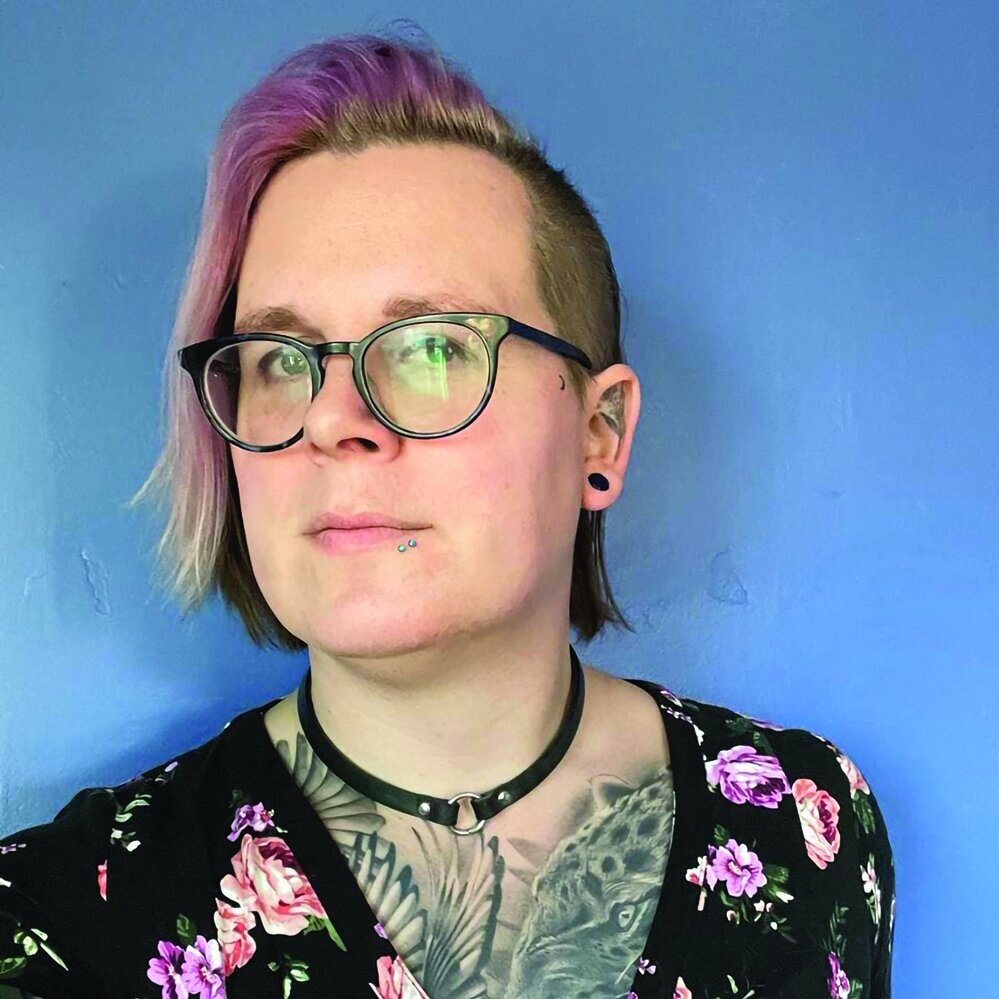
Okay, not really a physicist, but she uses isotopic dating techniques to determine the age of fossils, and uses physics principles when teaching about the history of life on Earth.
5. Clara Barker
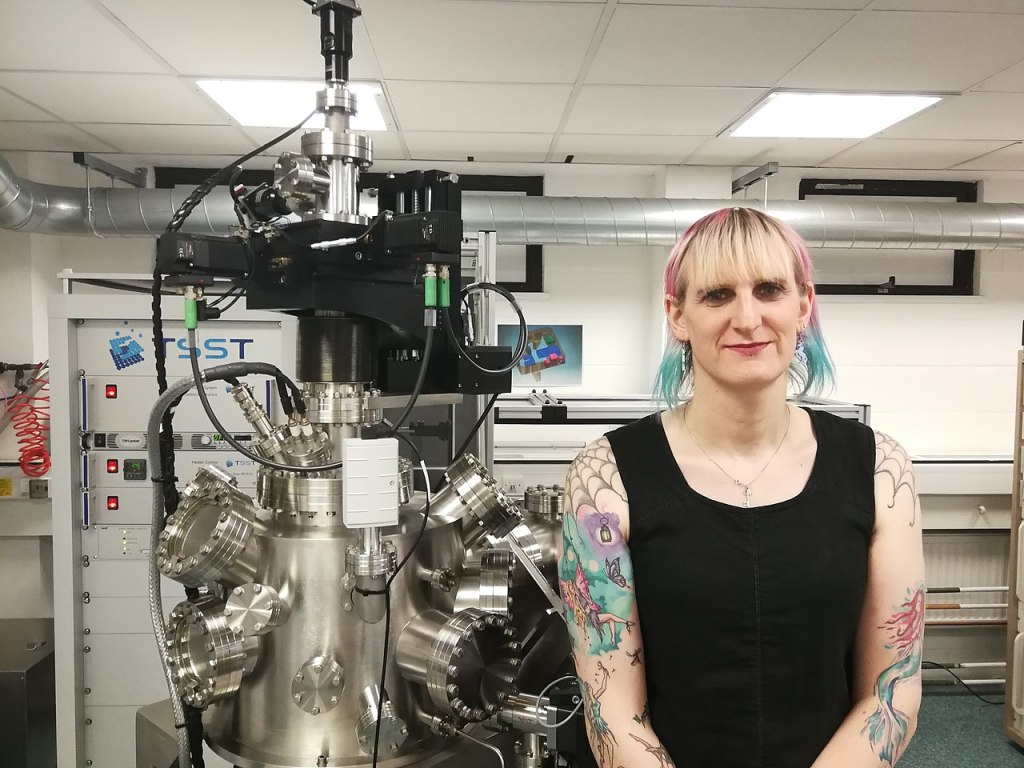
She contributed to our understanding of thin film coatings in material science and superconductivity, and was awarded the Points of Light award in 2017.
Reminder: Weekly Live Tuition Sessions!
SATURDAY 21st March 2026
| GCSE Physics | 9:30am | Atoms and radiation |
| A-Level Physics | 10:30am | Moments |
| GCSE Astronomy | 11:30am | Exploring starlight (2) |
If you wish to enrol on the tuition sessions and haven’t yet, then click enrol below
 Physics with Keith