
I was very kindly and generously gifted a Hewlett-Packard HP 9820A calculator by a good friend and ex-colleague. Unfortunately, the thing does not work, but I will try to get it working when I find the time between other things I have to do.
The HP 9820A was the world’s first calculator that used an algebraic input logic. I am not keen on algebraic input; I far prefer Reverse Polish Notation. Nevertheless, this was a tremendous achievement in 1972, when this calculator was released! This is a programmable scientific calculator with a built in card reader and printer. Take a look at the video below where I first get the chance to fiddle with it.
Alas, the calculator does not work, but all is not lost. It looks as though the plotter that came with it will work.
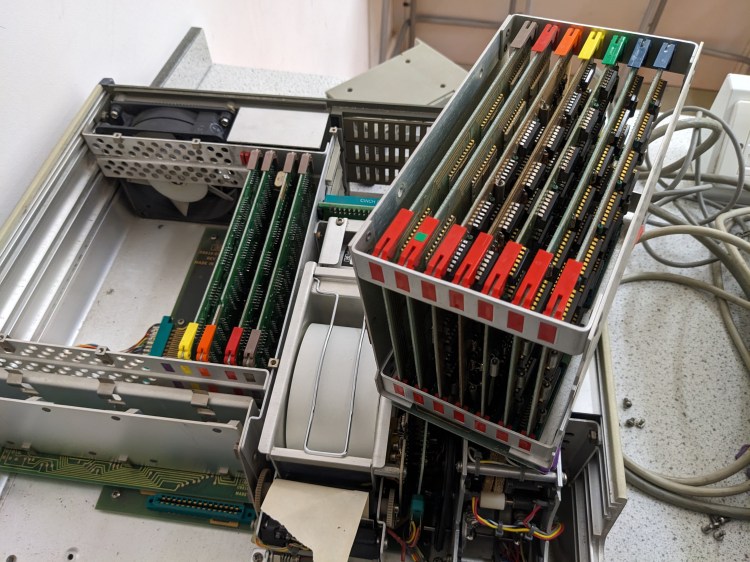
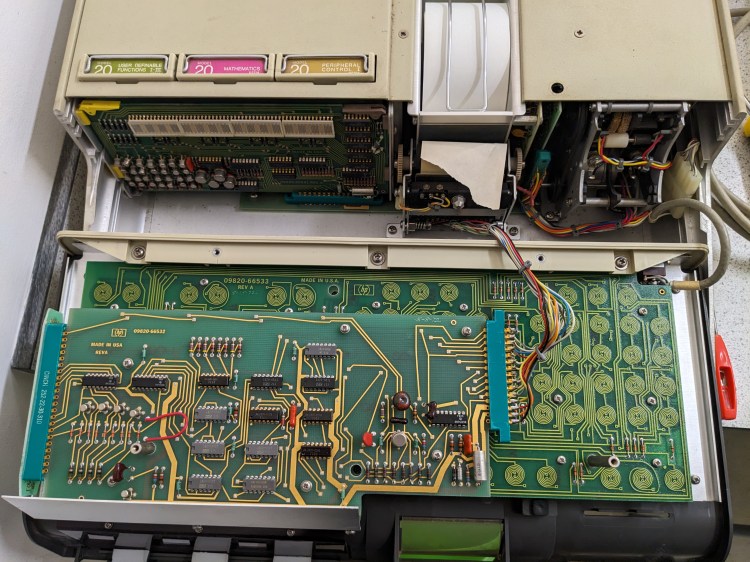
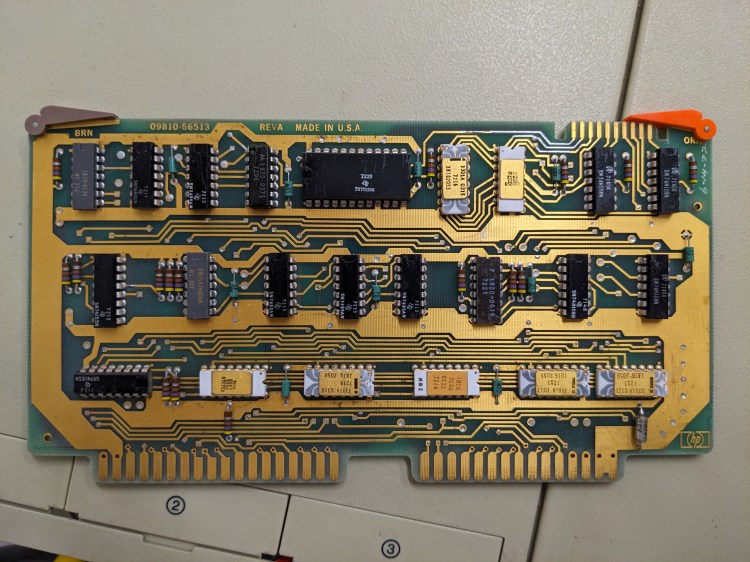
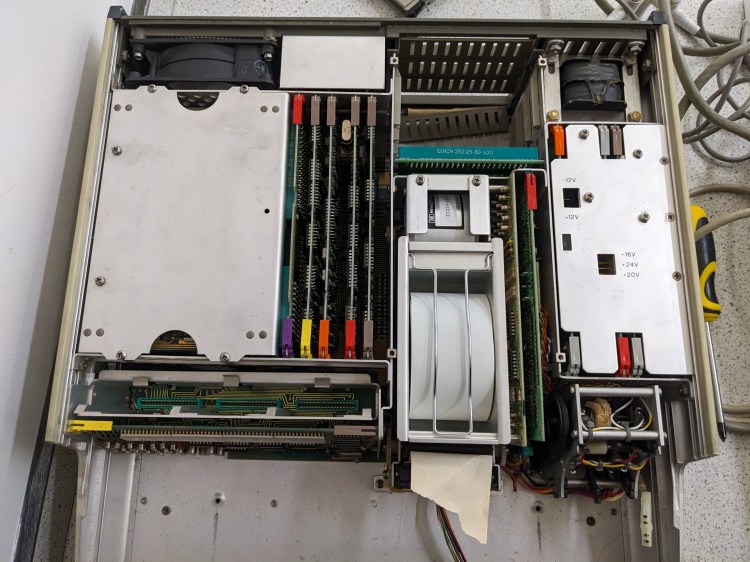
I opened up the calculator to see if there were any obvious fuses that could be replaced, or if there were any electrolytic capacitors that were leaking, and would need to be replaced.
Below is a slideshow of pictures from inside the calculator, where I’m looking for fuses or electrolytic capacitors that might need replacing. I cannot see any, can you? Let me know in the comments please!





 Physics with Keith
Lovely old unit. Not sure what can be done. Maybe do the obvious first. Clean the contacts and put all the cards back in. You may need to break out a logic analyser. As for the plotter, you might end up with an expensive etch-a-sketch if you can get the vertical movement working properly 🙂
LikeLike
The Plotter is easily fixed, it just needs the pot replacing, and I might replace the others while I’m at it because they’re all a bit noisy.
I can’t see any obvious damage on the boards in the calculator, so I guess giving it a good clean is the best start. I haven’t looked at the boards near the power supply yet, so there might be an obvious fix there… I hope.
As for logic analysers, I’ll have to stare blankly for a bit 😂
LikeLike