Achievable Scientific New Year’s Resolutions for 2025

It’s 2025, just four years until the asteroid Apophis hits the Earth and causes an extinction-level event (according to predictions made when it was first discovered in 2004; it was given a 2.7% chance of hitting the Earth. More recent observations have since ruled that out, but it’s still fun to imagine).
To celebrate another year of human existence, it is traditional for people to make New Year’s Resolutions, so here are a few to get you started.
1. Discover room temperature superconductivity

Room temperature superconductors have been developed, but they only work at ridiculously high pressures. If room temperature superconductors can be invented that operate at reasonable pressures, and if they use chemicals that are readily available, it would change the world. It would save the world! Magnetic levitation would eliminate friction, a major source of wasted energy. There would be no waste energy in transferring energy via currents in cables. Superconducting magnets used in MRI scanners would no longer need liquid helium to cool them. The superconducting magnets used in a tokamak for nuclear fusion would not need cooling. Why not make it your aim to make 2025 the year you discover room temperature superconductivity?
2. Discover cold fusion

Another way to save the world would be to master and be able to harness nuclear fusion. We’ve been able to achieve fusion for decades, but we still cannot use it to make viable power stations for electricity generation. One of the biggest challenges is the temperature that the hydrogen plasma must reach for fusion to be initiated. In 1989, two scientists from the University of Southampton and the University of Utah announced that they had discovered cold fusion, but it was soon shown to be wrong and destroyed the scientists’ careers. There are small teams still trying to develop cold fusion, and unexpected discoveries have been made before (the discovery of high temperature superconductivity was very unexpected indeed!) so who knows, maybe you can discover cold fusion yourself in 2025 and solve the energy crisis!
3. Discover warp-drive technology or worm-hole technology
Maybe the end of the world is inevitable. Maybe we cannot solve the problem of overpopulation (cue people saying ‘the world is not overpopulated, we have a resource management problem’). Maybe we cannot solve the environmental crisis of global warming (cue people saying ‘I do not believe in global warming’. Well, you are wrong). Maybe we cannot avoid global catastrophe, disease, war, famine, extinction. Another solution is getting off the Earth, but if we cannot even bring the Earth’s biosphere back into a habitable state, what chance do we have of bio-engineering another celestial body such as the Moon or Mars? The Biosphere 2 project showed that we were unable to create a self-sustained isolated habitation that could support human life.
So, we don’t have another viable biosphere within practical range of the Earth, and we cannot make one (even in a dome), our last resort would be to explore further afield. The problem with that plan is that we cannot travel further afield! Space is vast! The nearest potentially-habitable exoplanets are so far away that it would be physically impossible to reach them. It would take thousands of years, tens of thousands of years, maybe hundreds of thousands of years. We cannot even build simple terrestrial technology to last a few decades, let alone multiple generations!
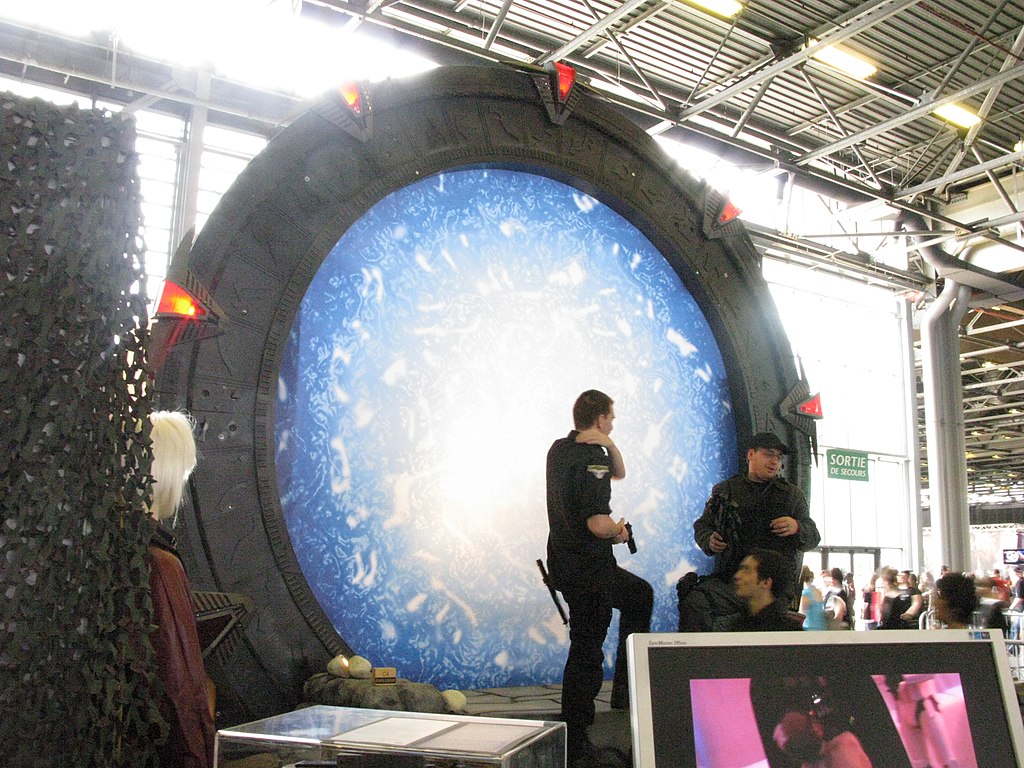
How do we get out there amongst the stars exploring planets? The short answer is, we can’t. Not until we discover some new physics that is currently sci-fi. Warp engines work well in Star Trek, but they don’t really exist. Worm holes are the main MacGuffin in the Stargate franchise (my favourite science-fiction franchise), but we didn’t really dig up an alien artifact in 1928 that can transport us to other habitable planets – oh how I wish we did. If someone can invent worm-holes or warp drive in 2025, we can get get out there and start exploring the stars properly! Resource shortages would be a thing of the past!
4. Develop a vaccine for all diseases, known or unknown

Of course, the biggest issue with using our stargate to explore other worlds would be disease. If we discover alien life, we will kill it and it would kill us. On Earth, the Europeans visiting the New World caused pandemics. In the sixteen century, Europeans gave Native Americans smallpox, and in return the Europeans were given Syphilis. An exchange that killed 90% of Native American tribes in some areas. These human populations had been separated by a few thousand years. Imagine the impact of meeting aliens from distant exoplanets! Before we use our newly invented stargate, we need to figure out how to become immune to all diseases. This is no easy task, because our body requires bacteria to work, about 1-3% of the human body is bacteria. That’s a few kilograms of bacteria per person! We cannot just kill all bacteria, because it would kill us too, unless we replace the bacteria with some sort of nano-robot, but then these nano-robots might be infectious to extraterrestrials too. Maybe in 2025 some clever biologist can figure out how to master disease.
5. Cure cancer
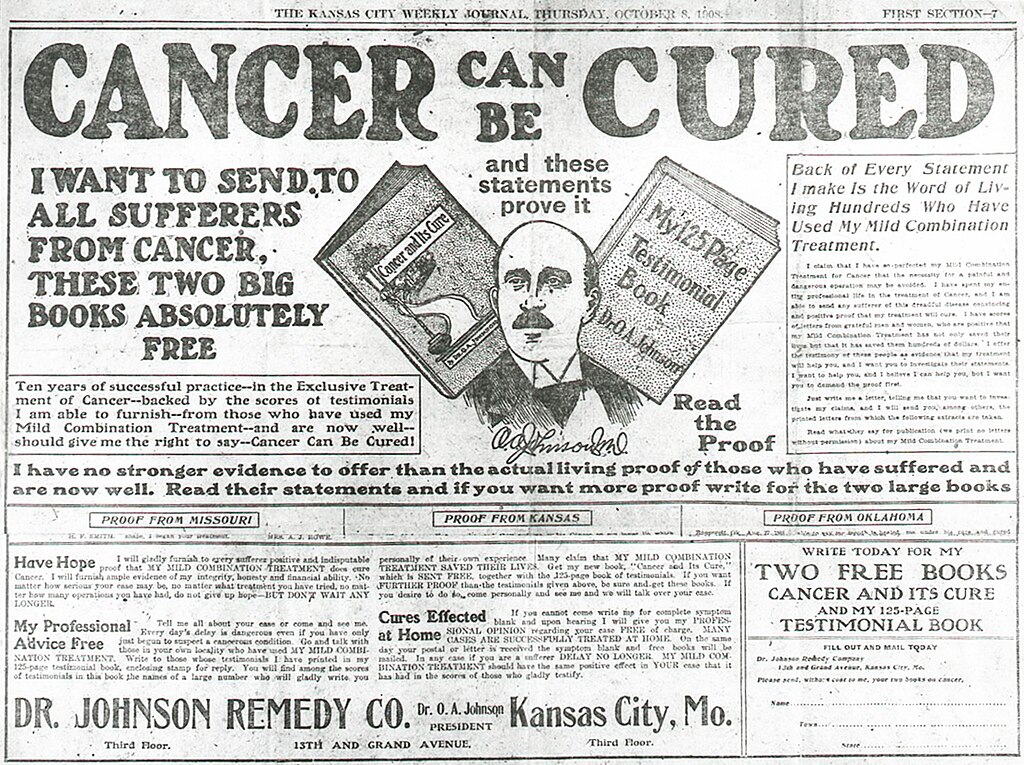
Ah, the flip side to the evolutionary coin. If we are happy with how small mutations over time can cause species to become more suitable to their environment, then we must also accept the risk of mutations that make us less suitable. Cancer is inevitable, and the longer we live, the more likely we are to suffer. When we are out in deep space late in 2025, using our cold-fusion powered warp drives to populate exoplanets whilst ensuring native flora and fauna aren’t adversely affected by our presence, we will be exposed to radiation. Even astronauts on the International Space Station are exposed to a significant dose of radiation, and they are just above the atmosphere, still protected somewhat by Earth’s magnetic field. Ionising radiation exposure increases the risk of developing cancer. Deep space exploration will need hefty radiation shielding, or maybe just a way to cure cancer. Come on biologists, make yourselves useful! Cure cancer in 2025! Physicists invented microscopes to help you, now do your part!
6. Develop a method of transferring consciousness into a robot

There is a small chance that 2025 won’t be the year we discover room temperature superconductivity, cold fusion, warp drive, vaccines for all diseases and curing cancer. Okay, so what else can we do? Let’s make 2025 the year we develop computers sophisticated enough to reproduce the functionality of the human brain, figure out how to recreate consciousness electronically, and figure out how to record and transfer all of a persons knowledge and personality from their soft squishy human brain into a computer. Then we do not have to worry about using warp drives or wormholes to explore space, we just put the crew on standby mode until they arrive. We wouldn’t have to worry about disease, just restore to the last stable state before whatever freaky computer virus ravaged the crew. No need to worry about cancer, because there will be no squishy organic parts with DNA that can become corrupted. Sign me up! Come on computer scientists, you are so close with your large language model machine learning and generative AI.
Conclusion
Okay, these New Year’s resolutions aren’t exactly realistic or achievable. This whole post was a bit of fun. One of my New Year’s resolutions should be to be more respectful of the lesser sciences… and I’ll start that… now!
(Don’t hold out much hope though)
Why not share your own New Year’s resolutions below!
Reminder: weekly tuition sessions!
Saturday 6th June 2026
| GCSE Physics | 9:30am | Topic: Cosmology |
| A-Level Physics | 10:30am | Topic: Energy resources |
| GCSE Astronomy | 11:30am | Topic: Navigating the celestial sphere; recognising constellations |
If you wish to enrol on the tuition sessions and haven’t yet, then click the button below