“Physics is JUST applied mathematics”
Author note: this article is for entertainment purposes only and is deliberately controversial.
“Physics is just applied mathematics.” I’m sure you’ve heard this said many times, usually by a smirking child who hasn’t actually studied physics, but feels they’re somehow winning when they try to annoy their teachers; the very same teachers who are trying to help the child make the best possible start in life. The statement is what my generation might call ‘trolling‘, or what younger generations might call ‘rage baiting‘.
Physics without mathematics is mute, mathematics without physics is logorrheic.
Mathematics is a tool used by physicists and (to a lesser extent) engineers, chemists, and biologists. See, I also enjoy a bit of rage baiting. I understand the appeal. However, I am duty-bound to respond to the ‘just applied mathematics‘ statement in defence of my subject.
Physicists invented mathematics so that they could do physics. Studying mathematics without applying it to the sciences is like becoming an expert in hammers without ever hammering in a nail. The world needs hammer-experts, but without the need to use a hammer, the hammer would never have been invented.
Immanuel Kant is reported to have said, “physics without mathematics is blind; mathematics without physics is lame.” I would prefer to say, “physics without mathematics is mute, mathematics without physics is logorrheic.”
(Side note, logorrhea is a more technical way of saying ‘verbal diarrhoea‘.)
Just like there is joy to be gained by solving a sudoku puzzle but it’s not actually productive or useful, similarly studying mathematics for its own sake may be fun but it is only when it is applied that it becomes worthwhile and useful.
Now, someone may respond by saying, ‘the mathematics has to be there to be used by the physicists (and other lesser-scientists). Just because the mathematics has not been found to be useful yet, does not make it useless.‘ My response to that is that mathematics was invented by physicists to do physics. That’s what I want to present in this blog post.
The older name for the subject we now call physics was natural philosophy. The earliest natural philosophers were interested in all aspects of the natural universe, including the cosmos. It was only far later (as late as the mid 19th century) that the disciplines of chemistry and astronomy branched out from the rest of natural philosophy. In the early days of what we now call science, all scientists were physicists.
14. Feynman diagrams
Inventor: Richard Feynman (1950CE), a physicist whose groundbreaking working in quantum electrodynamics and quantum field theory required a new shorthand notation to aid the calculation of interaction probabilities.

13. Bra-ket notation
Inventor: Paul Dirac (1939CE), a physicist who developed an intuitive new mathematical system for solving complex quantum mechanics problems, now used in abstract mathematics and functional analysis too.
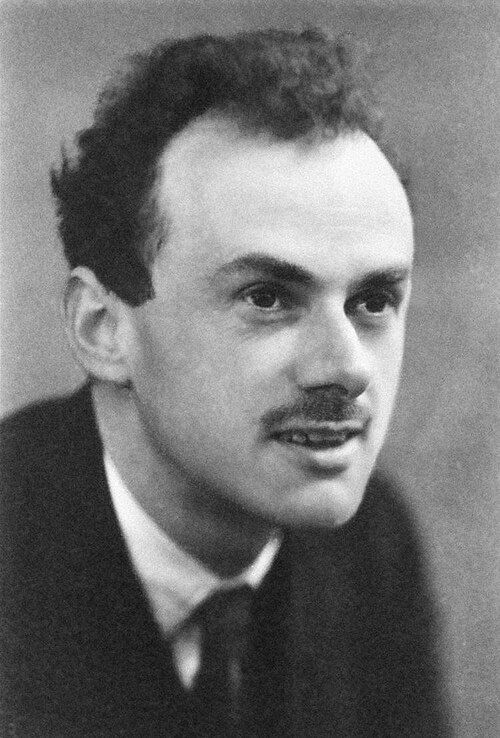
12. The Schrödinger equation
Inventor: Erwin Schrödinger (1926CE), a physicist who developed a continuous wave-based framework for quantum mechanics (unlike Werner Heisenberg’s discrete matrix-based approach).
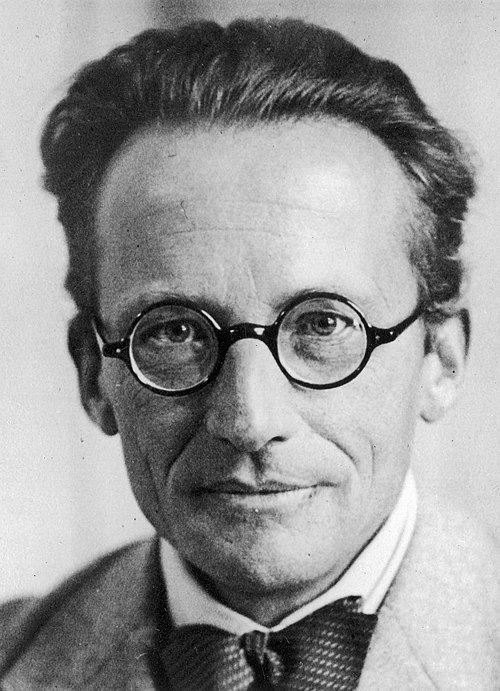
11. Operational calculus
Inventor: Oliver Heaviside (1893CE), a physicist whose work in electromagnetism led to him developing a method of treating the differential operator as a variable so differential equations could be solved algebraically.

10. Quarternions
Inventor: William Hamilton (1843CE), a physicist who needed an algebraic system to describe the rotation of points in three-dimensional space.
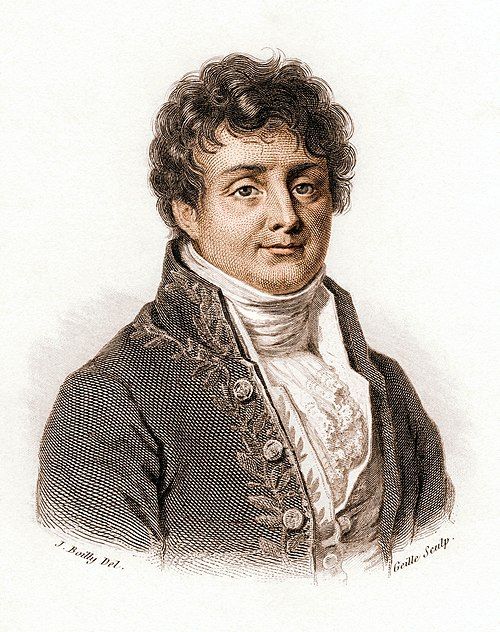
9. Fourier series and Fourier transformations
Inventor: Joseph Fourier (1822CE), a physicist who needed a way to model the initial arbitrary heat distribution across a solid body. His approach is the foundation for harmonic analysis and signal processing.
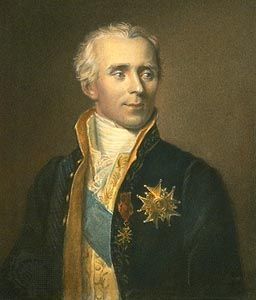
8. Leplacian operator
Inventor: Pierre-Simon Leplace (1787CE), a physicist who developed a rigorous approach to solving problems in harmonics and heat flow. ∇² is ∇•∇, the divergence of the gradient of a scalar function or field. Invented by Leplace so he could solve celestial mechanics problems.
7. Variational calculus
Inventor: Joseph-Louis Lagrange (1755CE), a physicist who rewrote classical mechanics to make it easier to solve complex problems by minimising the integral of the Lagrangian over time; invented the Lagrangian, the difference between kinetic and potential energy stores in a system.

6. Calculus
Inventor: Isaac Newton (1666CE), a physicist who invented calculus to solve mechanics problems and universal gravitation.

Inventor: Gottfried Leibnitz (1675CE), a physicist and engineer who first derived the equation of kinetic energy and developed pumps and water wheels. Invented calculus to solve mechanics problems, just as Newton did. Leibnitz also invented the first mechanical calculator.

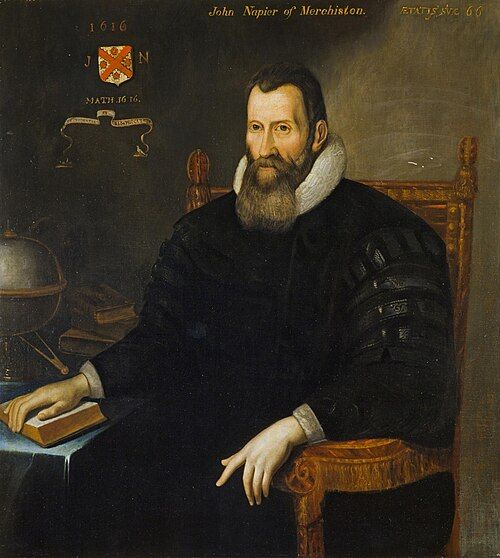
5. Logarithms
Inventor: John Napier (1614CE), a physicist whose work on the motion of celestial bodies led to the invention of logarithms to simplify spherical trigonometry.
4. Trigonometry
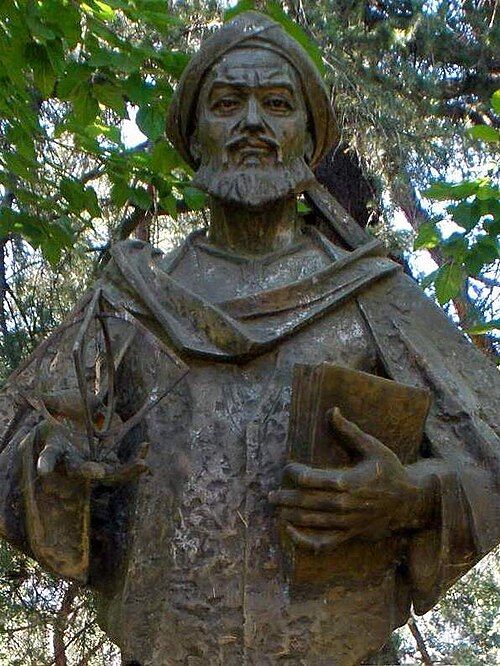
Inventor: Abu Abd-Allah Muhammad ibn Musa al-Khwarizmi and Abu al-Wafa’ Buzjani (around 900CE), physicists whose work on solar astronomy and timekeeping led to the development of the tangent function and other trigonometric functions.
Inventor: Aryabhata (around 500CE), a physicist whose work on the motion of celestial bodies (this seems to be a very popular pastime for physicists) led to the refinement of Hipparchus’s tables and the formalisation of the functions jya and kotijya. A mistaken translation into Latin from Arabic, which was transliterated from the Sanskrit words, led to the modern names of these functions. The Sanskrit word jya means bowstring. Into Arabic it was transliterated as jiba, but often written without the short vowels, so it got mistaken for the Arabic word jayb, meaning a bay or cove, which is sinus in Latin.

Inventor: Hipparchus (around 150BCE), a physicist whose work on the motion of celestial bodies led to the first sine tables (a table of chords for a circle).

3. Positional notation
Inventor: unknown Babylonians (around 2000BCE) and independently unknown Mesoamerican Mayans (around 300AD), physicists developed methods for timekeeping and communicating instants in time and durations of events, necessitating place values (base 60 for the Babylonians, still in use to today, and base 20 for the Mayans).
2. Numbers
Inventor: al-Khwarizmi (again, see number 4 on this list), a physicist who popularised the Hindu-Arabic numeral system. Al-Khwarizmi was the father of algebra and his name also gave us the word algorithm. He used Hindu-Arabic numerals in his astronomical tables.
Inventor: Brahmagupta (around 650CE), a physicist who formalised the Babylonians’ numeral for zero. He studied the motion of the moon, planets and stars, calculating the positions of planets and the timings of eclipses. He was also the first to describe the phenomenon of gravity as a force.
Inventor: unknown prehistoric humans, who invented quantification before the invention of money or agriculture. The necessity of tracking possessions stems from a requirement to measure control variables and make adjustments to ensure the values of control variables do not change. The rigorous use of control variables is certainly science, which (before chemistry and biology were given separate names) was historically called natural philosophy. Natural philosophy is now called physics, so I am declaring that physicists invented numbers.

Conclusion
Most of the early development of mathematics was done by individuals trying to make sense of celestial mechanics. Astronomy is a branch of physics (I keenly await a horde of angry astronomers who disagree with me, pushing up the engagement metric and helping the algorithms to make this post more widely read [insert evil laugh]). Physics is the major component of natural philosophy (since biology and chemistry jumped ship), so I have arrogantly declared that any discoveries or inventions by an astronomer or natural philosopher are also inventions by a physicist.
Ah, but perhaps I have to concede one thing…
(1. Noether’s Theorem and abstract algebra)
Inventor: Emmy Noether (1918CE), a mathematician who was helping Albert Einstein and David Hilbert with their mathematical difficulties, and so decided to invent the most profound and deepest mathematical foundation for why physics works the way it does. Her mathematical framework explained all of the conservation rules in physics.
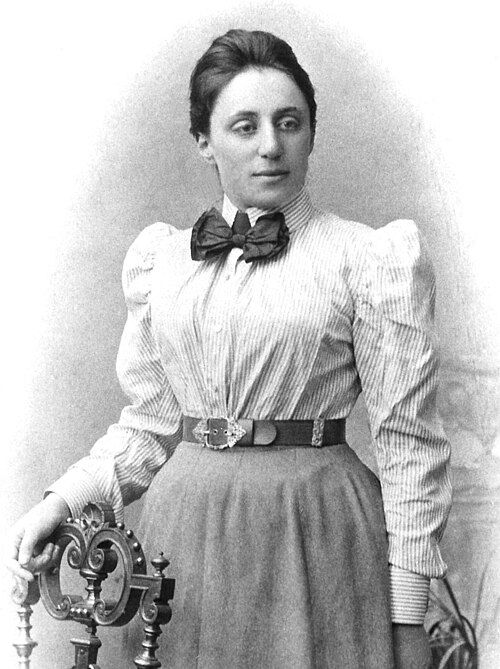
So, physicists invented mathematics, but it took a mathematician to explain all of physics.
Reminder: weekly tuition sessions!
Saturday 6th June 2026
| GCSE Physics | 9:30am | Topic: Cosmology |
| A-Level Physics | 10:30am | Topic: Energy resources |
| GCSE Astronomy | 11:30am | Topic: Navigating the celestial sphere; recognising constellations |
If you wish to enrol on the tuition sessions and haven’t yet, then click the button below




Hi Keith, We enjoy hearing your news from your email qnd FB updates. Please could you send the details and how to log on for tomorrow’s Christmas Eve special as Oliver and my husband would like to join in if possible. The email 14th Dec I’m replying to said “details to follow ” but cannot see a follow up. Thanks, Jane
Thanks for commenting Jane. I’ve embedded the stream in the latest post 🙂 it’ll also be available here: https://www.youtube.com/live/Hlhku4LlSAk?si=wAOrJ-umZWpuYaIN