Venera missions, photographing the surface of Venus
I’m always fascinated by the environment on Venus. It’s such an inhospitable place, despite being about the same size and mass as the earth (with a surface gravitational field strength about 90% of the Earth’s. Both Earth and Venus have essentially the same composition; a 3000km radius iron and nickel core, a molten or semi-solid silicate mantle, a 20-50km thick rocky crust. And yet, the environment of Venus is not suitable for human life. It’s not even suitable for robot life!
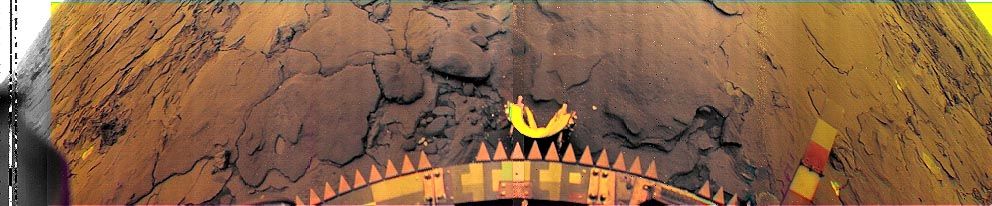
Between 1975 and 1982 the USSR managed to capture six photographs from the surface of Venus. These are the only photographs ever taken from the Venusian surface.
1975: Venera 9
One photograph was taken and transmitted back; the first ever photograph from the surface of another planet. The lander remained in contact for 53 minutes. Venera 9 had two cameras, but the other lens cap did not release.

1975: Venera 10
One photograph was taken. The lander remained in contact for 65 minutes. Venera 10 also had two cameras, but the other lens cap did not release.

1982: Venera 13
Venera 13 took two photographs. The lander remained in radio contact for 127 minutes.

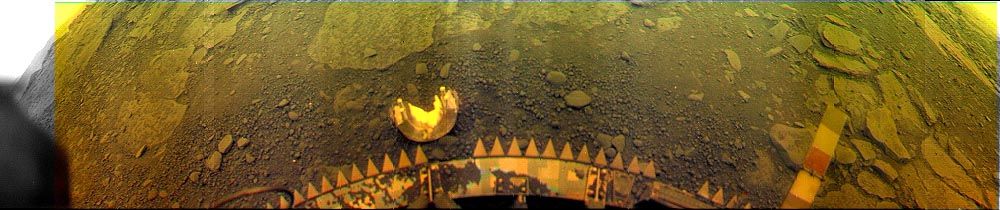
1982: Venera 14
Venera 14 took two photographs. The lander remained in contact for 57 minutes.

Venera lander

The USSR designed the Venera landers to survive for 32 minutes.
The surface temperature on Venus was around 470°C, which is hot enough to melt the electronics within the probe. The surface pressure was 9.2MPa (equivalent to being ~1km beneath the ocean), which is why the landers had to be spherical pressure vessels. The landers descended through thick clouds of sulfuric acid with a pH of 1.2.
Reminder: weekly tuition sessions!
Saturday 13th June 2026
| GCSE Physics | 9:30am | Topic: Vectors |
| A-Level Physics | 10:30am | Topic: Diffraction and interference |
| GCSE Astronomy | 11:30am | Topic: Observations: demonstrate the changing appearance of lunar features |
If you wish to enrol on the tuition sessions and haven’t yet, then click the button below